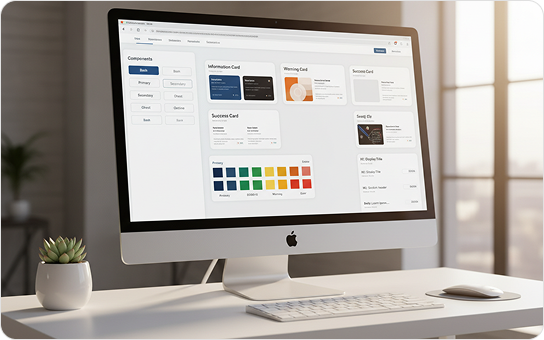
1. Why complexity happens
Product complexity is rarely intentional. It accumulates slowly over time—a byproduct of success, expanding scope, and the compounding layers of business requirements. As a product matures, every new feature, technical constraint, and diverse user cohort introduces another layer of friction.
When organizations attempt to solve user problems by simply stacking more capabilities onto an existing structure, cognitive load increases exponentially. Without a dedicated strategy to govern and consolidate features, the interface inevitably becomes an archaeological map of company history rather than a clear path for the user.
2. Start with the problem, not the interface
Before designing any solution, it is critical to thoroughly understand the underlying problem. Jumping straight into interface design often leads to solving the wrong issue or addressing only surface-level symptoms.
3. Understand the user journey
Mapping out the user's journey helps identify pain points, drop-offs, and moments of friction. By viewing the product through the user's eyes, designers can make informed decisions that streamline the overall experience.
4. Reduce cognitive load
Users have a limited amount of mental bandwidth. Simplifying choices, progressively disclosing information, and establishing clear visual hierarchies are essential strategies for reducing cognitive load and preventing user fatigue.
5. Design for clarity
Clarity should always trump cleverness. Interfaces must communicate their purpose instantly and unequivocally, guiding users to their goals without requiring them to decode complex layouts or ambiguous icons.
6. Test, learn and iterate
No design survives contact with real users unchanged. Continuous testing, gathering feedback, and rapid iteration are the engines of product improvement, ensuring that the design evolves to meet actual user needs.
7. Final thoughts
Designing better digital experiences is an ongoing commitment to empathy, simplicity, and continuous refinement. By keeping the focus on the user, we can build products that not only function well but are genuinely delightful to use.

You might also like
Fresh perspectives and practical frameworks from the design frontlines.
Designing SaaS Products That Users Actually Enjoy
How we applied emotional design principles to turn boring enterprise screens into an experience that boosts customer retention.

Why UX Research Should Start Before the First Wireframe
Stop designing based on assumptions. Explore the exact user research methodologies that validate product-market fit early.


Building a Scalable Design System Without Slowing Down
Learn how to strike the perfect balance between strict component consistency and immediate design velocity.

Let's design something meaningful.
Have a complex product challenge? Our team can help turn your ideas into intuitive, scalable digital experiences that users love.
PROJECT DISCUSSION STRENGTH:
Discuss your project directly with us and get expert guidance
Share your business idea, project details, and requirements in a 1-hour discovery call. We'll help you understand the best approach, estimated cost, and timeline. Whether you're starting fresh or improving an existing project, we'll make sure it's a perfect fit for your goals.


Trusted by multiple happy clients worldwide

Jay Williams
Design Director